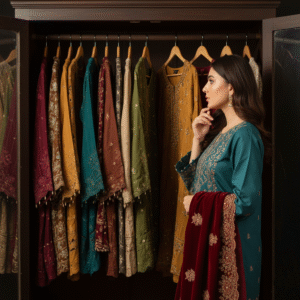
Pakistani traditional fashion is more than just clothing — it is a living celebration of history, artistry, and cultural identity. Each garment reflects centuries of craftsmanship, regional influences, and aesthetic sensibilities that have evolved over generations. From the vibrant embroidery of Sindh to the regal drapes of Punjab, Pakistani fashion showcases an incredible variety of textures, colors, and styles while staying deeply rooted in tradition.
Whether you’re preparing for a festive celebration, attending a wedding, or embracing daily traditional wear, understanding the essential elements of Pakistani fashion empowers you to dress with confidence, elegance, and authenticity. This guide explores clothing, fabrics, jewelry, accessories, regional styles, colors, and styling tips, giving you a complete picture of traditional Pakistani fashion today.
1. Traditional Clothing Essentials
Shalwar Kameez
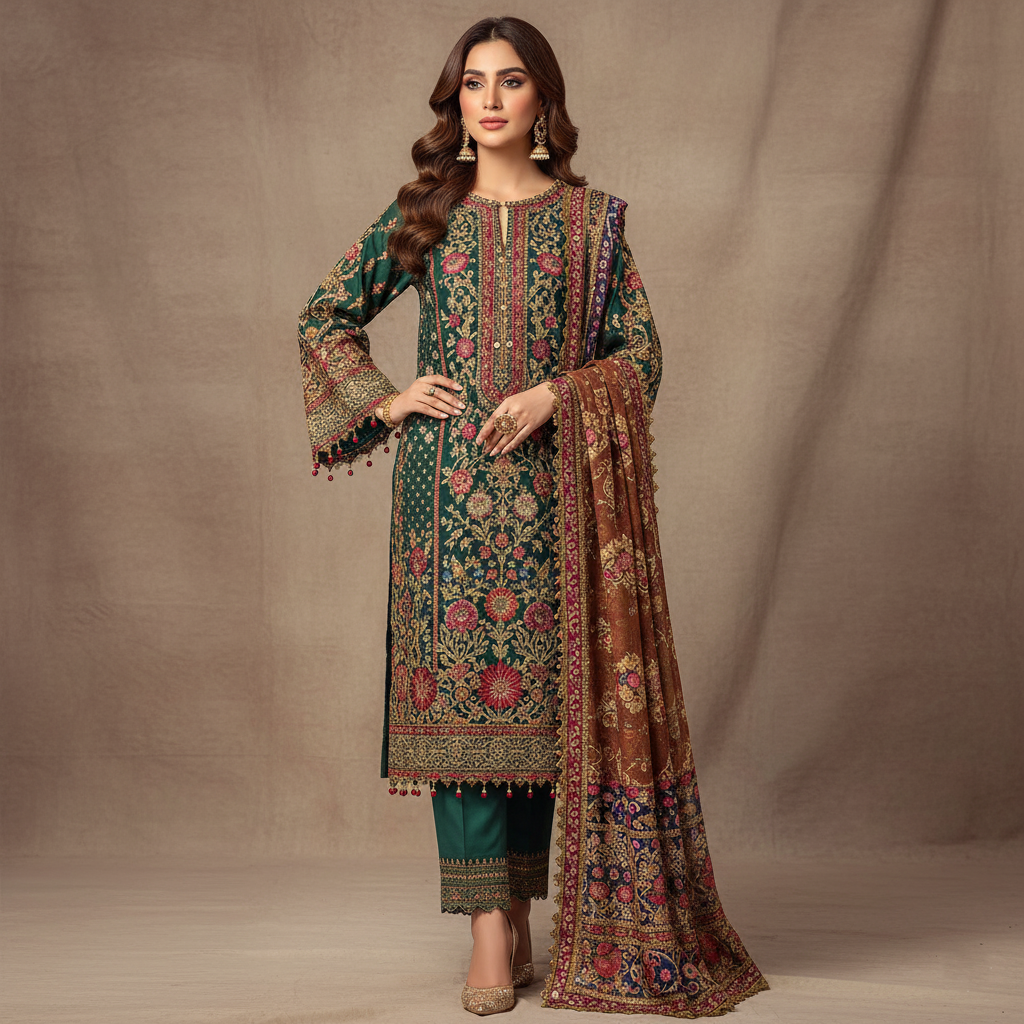
The shalwar kameez is the cornerstone of Pakistani attire and the nation’s iconic dress. Its beauty lies in its versatility — it balances comfort, modesty, and elegance seamlessly. The variety in cuts, fabrics, and embellishments ensures that this outfit works for daily wear, festive occasions, formal gatherings, and even bridal celebrations.
Daily Wear: Light fabrics like khaddar or linen, with soft prints or minimal embroidery, are perfect for office wear or casual outings. These suits are breathable, easy to maintain, and allow ease of movement without compromising style. Pairing them with a soft dupatta or lightweight shawl adds subtle elegance for everyday use.
Festive Wear: For cultural celebrations, Eid, or family gatherings, karandi, chiffon, or embroidered fabrics bring vibrancy and texture. Rich jewel tones like deep maroon, plum, emerald, or navy provide a luxurious feel, while light embroidery or delicate embellishments add sophistication without overwhelming the outfit.
Formal & Bridal Wear: Special occasions demand outfits in velvet, silk, or heavily embroidered karandi, often enhanced with tilla, resham, or zari work. These garments exude luxury and grace, perfect for weddings, receptions, or winter festivities. Velvet and silk not only provide warmth in winter but also add a royal aura, making every outfit suitable for photography and celebrations.
Styling Tips:
- Layer simple shalwar kameez with lightweight dupattas or shawls for understated elegance.
- Pair festive suits with statement jewelry and embroidered or embellished dupattas for a complete traditional look.
- Play with silhouettes — pairing a straight-cut kameez with cigarette pants gives a modern twist, while a flared frock-style kameez adds regal appeal.
2. Fabrics & Textures
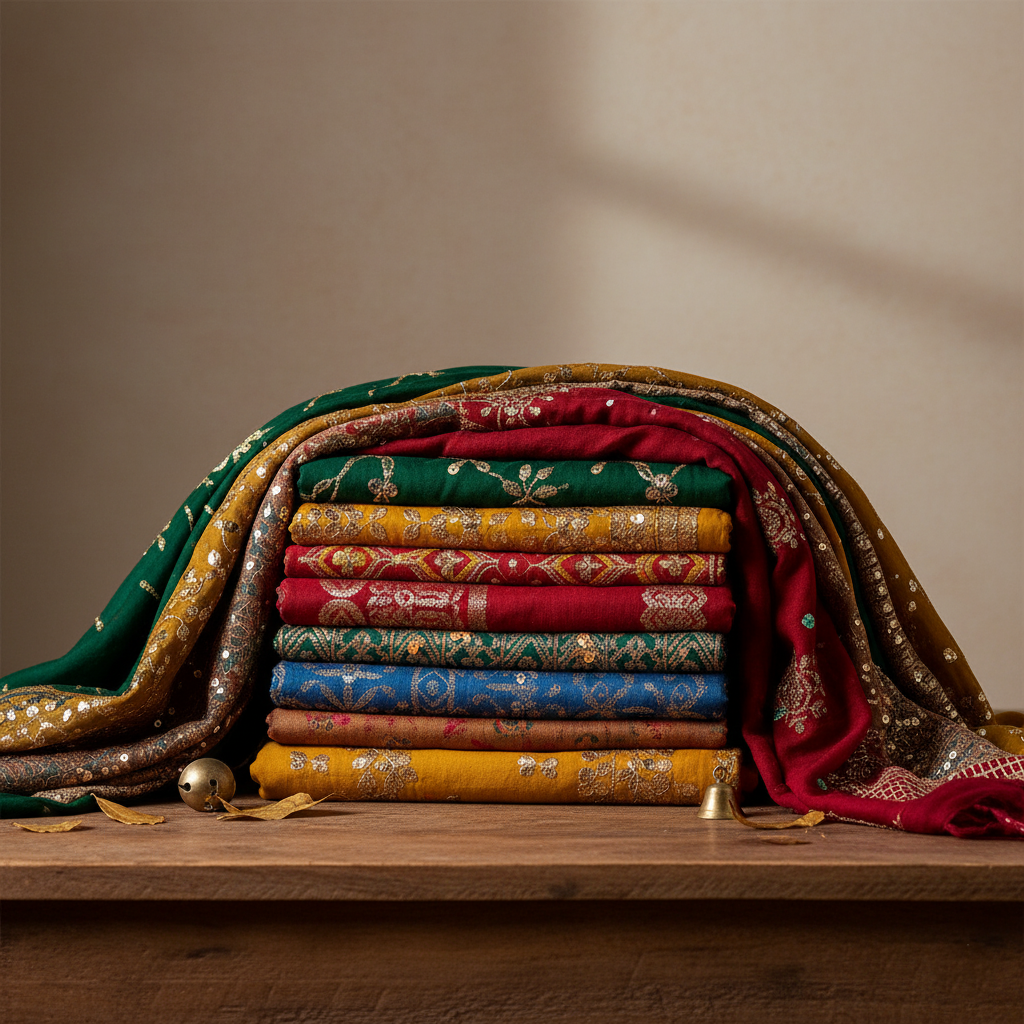
The choice of fabric in Pakistani fashion determines comfort, warmth, and the overall impression of an outfit. Different fabrics serve different purposes, especially across seasons and occasions.
Khaddar: Thick, textured, and perfect for winter. Khaddar maintains warmth while giving a casual yet elegant appeal. Suitable for everyday wear and semi-formal settings, it pairs well with light embroidery or printed patterns.
Karandi: Slightly heavier than linen, karandi has a soft, smooth feel, ideal for festive and formal occasions. Its structured texture makes it a perfect canvas for embroidery and embellishments.
Linen: Light and breathable, linen is ideal for early winter or cooler day events. Often chosen in pastel tones, it provides a fresh and casual elegance suitable for office wear or daytime gatherings.
Velvet: Velvet is luxurious, rich, and perfect for evening wear or weddings. Its depth and sheen instantly elevate any outfit, making it ideal for festive or formal occasions.
Chiffon & Silk: These fabrics are used for lightweight, flowing outfits, particularly formal suits or summer wear. Their delicate drape adds softness and sophistication.
Pashmina & Wool: Essential for layering, especially in winter. These fabrics not only provide warmth but also add texture and dimension to an outfit, complementing heavier embroidered suits.
Styling Tip:
- Mixing textures in a single outfit creates depth. For example, a soft chiffon dupatta over a structured karandi suit or a wool shawl draped over linen provides both contrast and sophistication. Combining different fabrics also adds visual interest and elevates simple designs.
3. Traditional Jewelry & Accessories
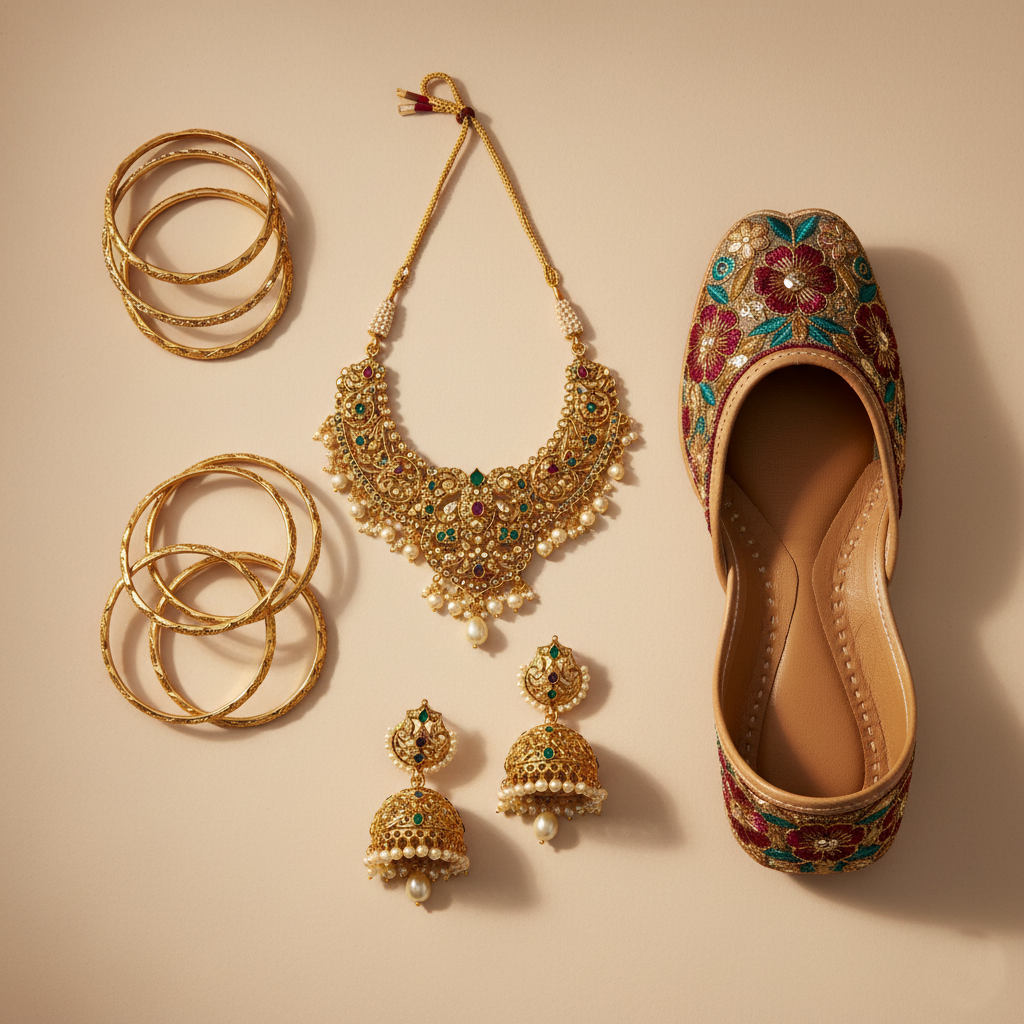
Jewelry is a vital component of Pakistani traditional fashion. It completes an outfit and communicates cultural richness, elegance, and occasion-appropriate styling.
Necklaces & Chokers: Gold, silver, kundan, and pearl pieces add elegance to weddings, festive wear, or formal events. Traditional chokers with intricate detailing draw attention to the neckline, enhancing embroidered kameez styles.
Jhumkas & Earrings: Statement jhumkas or delicate earrings complement festive outfits. While subtle earrings suit casual or office wear, heavy chandbalis or drop earrings enhance formal attire.
Bangles & Bracelets: Bangles can be simple for daily wear or intricately designed with gems and metalwork for weddings. Layering bangles adds dimension to the look.
Footwear: Khussa shoes, embroidered sandals, or traditional flats complete outfits. Khussa shoes, in particular, pair beautifully with festive or bridal wear.
Handbags & Clutches: Coordinated clutches or handbags accentuate embroidery or color tones. A gold embroidered clutch with a maroon velvet suit enhances luxury and tradition.
Styling Tip:
Balance jewelry with outfit intensity. Minimal embroidery calls for statement jewelry, whereas heavily embroidered suits pair best with delicate, subtle pieces. Combining modern accessories with traditional clothing also creates a stylish fusion look.
4. Regional Fashion Styles
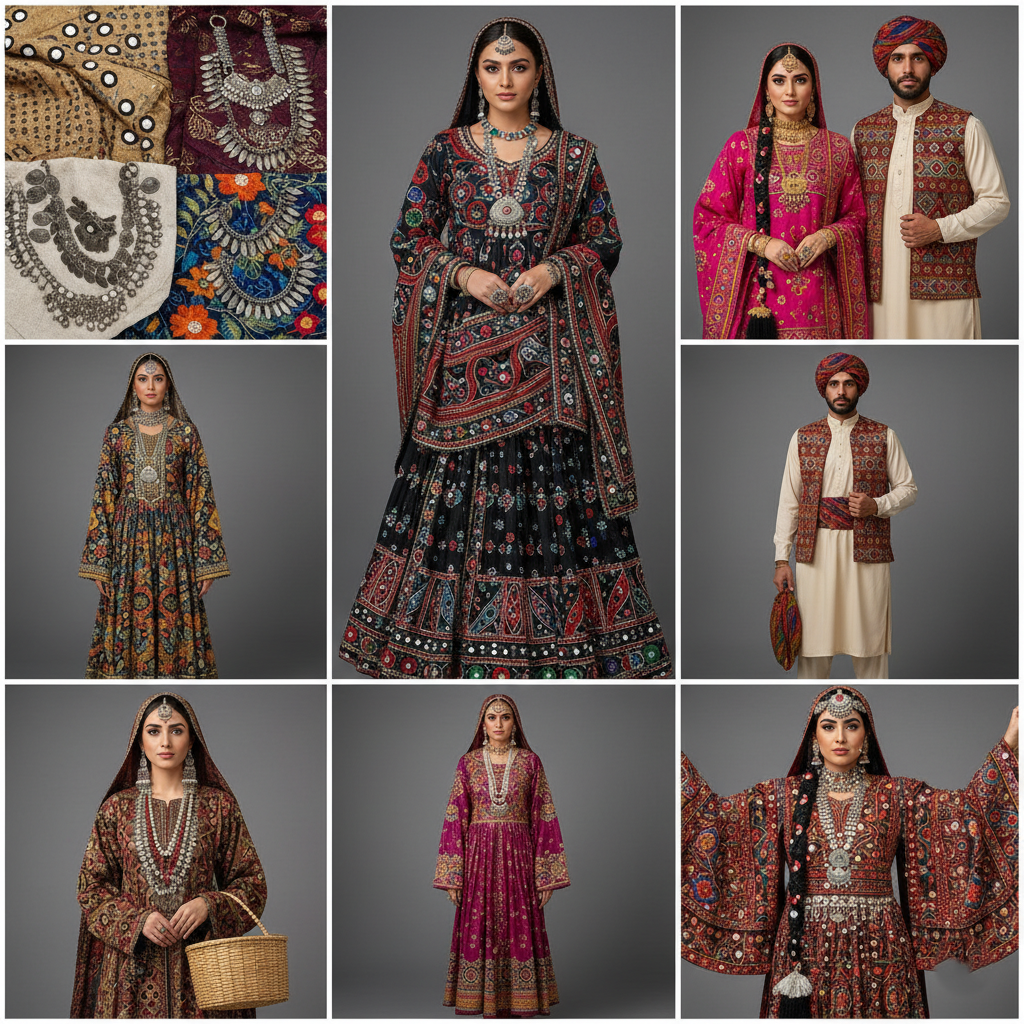
Pakistan’s fashion is incredibly diverse. Each region contributes its own textures, colors, and embroidery styles, making traditional clothing rich and multi-dimensional.
Sindhi: Known for bright colors, intricate mirror work, and geometric patterns. Sindhi outfits often feature bold embroidery that makes even simple fabrics stand out.
Punjabi: Famous for floral prints, phulkari embroidery, and vibrant color palettes. Phulkari dupattas are iconic and add cheerful energy to suits.
Balochi: Characterized by heavy hand-stitched embroidery in earthy tones. Balochi dresses are traditionally long and elaborate, reflecting tribal heritage.
Pashtun: Simple, practical, yet elegant. Pashtun attire emphasizes modesty and comfort, suitable for everyday use.
Kashmiri: Pashmina shawls, delicate embroidery, and soft textures define Kashmiri fashion. These elements are often incorporated into winter wear for warmth and elegance.
Styling Tip:
Mix regional influences for a fresh modern look. For example, a Sindhi embroidered dupatta with a simple khaddar suit creates a vibrant yet subtle ensemble. Combining multiple techniques honors tradition while keeping outfits contemporary.
5. Colors & Seasonal Trends
Colors are deeply symbolic in Pakistani fashion. They reflect occasion, season, and cultural significance.
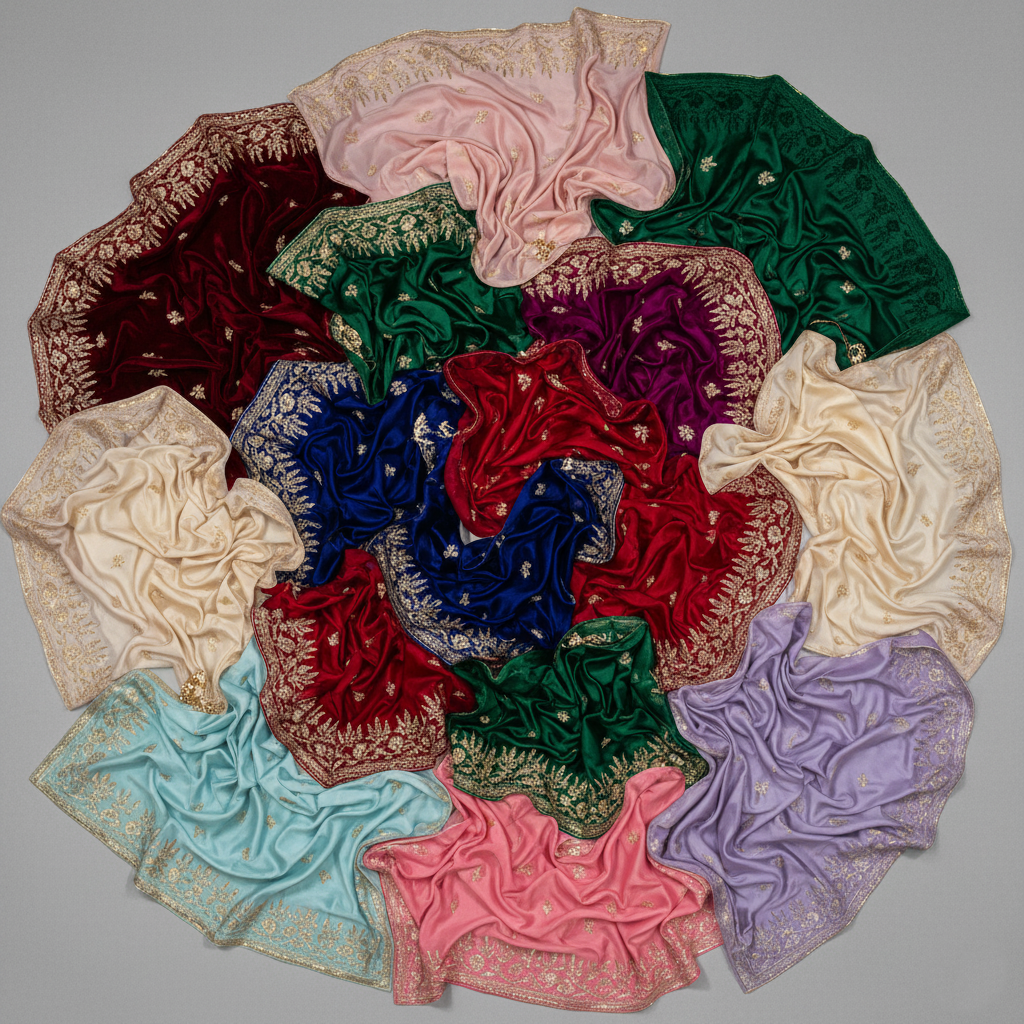
- Red & Maroon: Perfect for weddings and festive wear; symbolize joy and celebration.
- Green: Traditional for Eid and celebratory events; fresh and vibrant.
- Pastels: Ideal for summer casual wear, daytime events, or office wear; soft and calming.
- Jewel Tones (Plum, Emerald, Navy): Winter favorites; rich, luxurious, and ideal for evening events.
Styling Tip:
Mix complementary shades for maximum impact. For instance, a deep maroon outfit with golden embroidery paired with a beige or ivory dupatta creates a regal winter look. Layering tones subtly within the same outfit adds depth, elegance, and sophistication.
6. How to Style Traditional Pakistani Fashion Today
Pakistani traditional fashion can easily adapt to contemporary tastes. The key is balancing tradition with modern styling:
- Mix & Match: Combine fabrics, textures, and prints for a unique, fresh look. Pair a soft chiffon dupatta with a structured karandi suit for modern flair.
- Layering: Shawls, stoles, vests, or embroidered jackets can add warmth, dimension, and interest.
- Accessorizing: Jewelry, footwear, and clutches elevate the outfit; modern accessories can harmonize with traditional attire.
- Occasion Dressing: Keep casual wear light and breathable; reserve velvet, heavy embroidery, and rich fabrics for festive events or evening wear.
- Modern Touch: Pair traditional suits with heels, contemporary jewelry, or minimalistic clutches to achieve a fusion of old-world charm and modern sophistication.
✨ Final Thoughts
Pakistani traditional fashion is a beautiful symphony of heritage, artistry, and personal expression. Understanding fabrics, embroidery, colors, regional styles, and accessories allows you to curate outfits that are elegant, timeless, and culturally meaningful. A well-thought-out wardrobe balances daily comfort with festive grandeur, ensuring you always look graceful, stylish, and confident.
Whether for daily wear, festive celebrations, or weddings, Pakistani traditional fashion invites you to celebrate heritage while embracing your personal style.